
They Told Us
It Was Healthy.
Now millions are paying the price.
The Truth About Weight Gain
Decades of Advice.
Now Millions Are Sick.
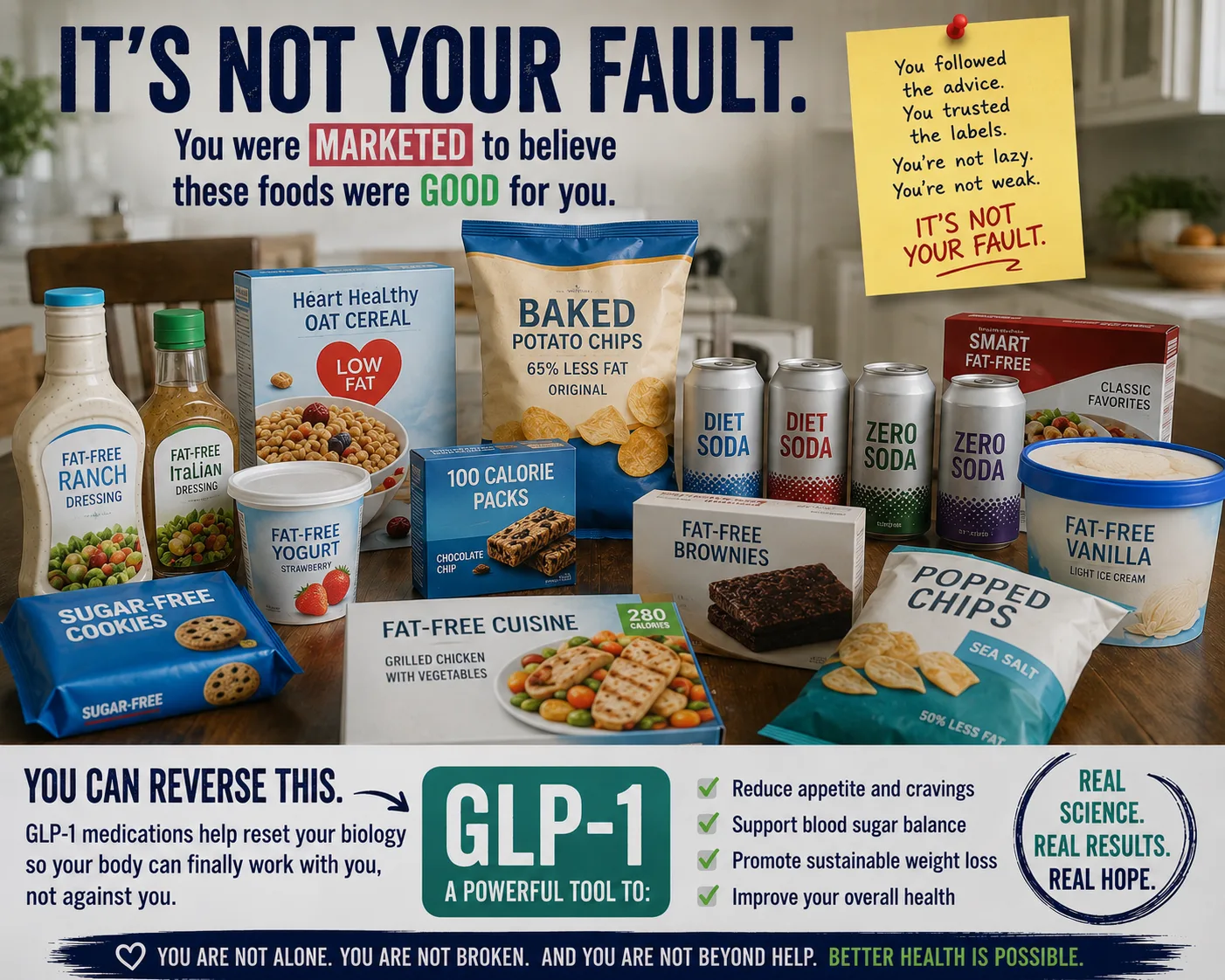
For decades, Americans were told that "fat-free" foods were healthy. We were told processed snacks were better than real food. Flavored yogurt, diet sodas, chemical sweeteners, low-fat frozen meals, and ultra-processed convenience foods were marketed as safe everyday choices.
And now? America is facing one of the largest obesity and metabolic health crises in recorded history.
More than 2 out of every 5 American adults are now considered obese, and nearly 1 in 11 suffer from severe obesity. Millions more are overweight and struggling with fatigue, inflammation, diabetes, high blood pressure, sleep apnea, heart disease, joint pain, depression, and metabolic dysfunction.
"This is not happening to 'other people.' This is happening everywhere."
In many Southern and Midwestern states, obesity rates now exceed 35–40% of the adult population. The CDC reports that every single U.S. state now has an obesity rate above 25%.
The Hard Truth
You Are Not Alone.And It Is Not Entirely Your Fault.
Highly processed foods were engineered to be addictive, inexpensive, and convenient. Modern lifestyles became more sedentary. Stress levels exploded. Sleep declined. Portion sizes increased. Sugar and ultra-processed ingredients became hidden in almost everything.
Over time, the body changes. For many people, weight gain becomes more than calories in and calories out. Hunger signals change. Cravings intensify. "Food noise" becomes constant — that relentless mental chatter about food that never stops.
The body begins defending excess weight, making traditional dieting frustrating, exhausting, and often unsuccessful.
South Florida Trim Clinic
Ready to Take Your Health Back?
Speak with a licensed provider from the comfort of your home. Free consultation. No judgment. Starting at $149/month.
CDC Surveillance Data · 2023
Top 10 Most Obese States
in America
Adult obesity prevalence by state — CDC Behavioral Risk Factor Surveillance System
Source: CDC BRFSS, 2023. Every U.S. state now reports adult obesity rates above 25%.
Peer-Reviewed Research
Obesity Doesn't Just Affect Weight.
It Affects Everything.
Research published in leading medical journals confirms obesity significantly elevates the risk of serious, life-threatening conditions.
Type 2 Diabetes
Obesity is the single largest modifiable risk factor for Type 2 diabetes. Excess adipose tissue drives insulin resistance and metabolic breakdown.
Zheng et al., The Lancet, 2018
Heart Disease & Stroke
Obesity contributes to hypertension, dyslipidemia, and atherosclerosis — all major drivers of cardiovascular disease and premature death.
CDC, Adult Obesity Facts, 2023
13 Types of Cancer
The CDC and NCI identify obesity as a known risk factor for 13 cancers, including breast, colon, endometrial, kidney, and pancreatic cancer.
NCI, Obesity and Cancer, 2022
Sleep Apnea
Excess weight — especially around the neck — narrows the airway, causing dangerous interruptions in breathing during sleep.
Young et al., Am J Respir Crit Care Med, 2002
Osteoarthritis
Every pound of excess weight adds approximately 4 pounds of pressure on knee joints, accelerating cartilage breakdown and chronic pain.
Messier, Arthritis & Rheumatism, 2004
Fatty Liver Disease
Obesity is the primary driver of non-alcoholic fatty liver disease, which can silently progress to cirrhosis and liver failure.
Younossi et al., Hepatology, 2019

American Medical Association · 2013
Obesity Is a Disease.And Now We Have the Tool.
In 2013, the American Medical Association officially recognized obesity as a chronic disease requiring medical treatment — not willpower, not discipline, not another diet. A disease deserves medical treatment.
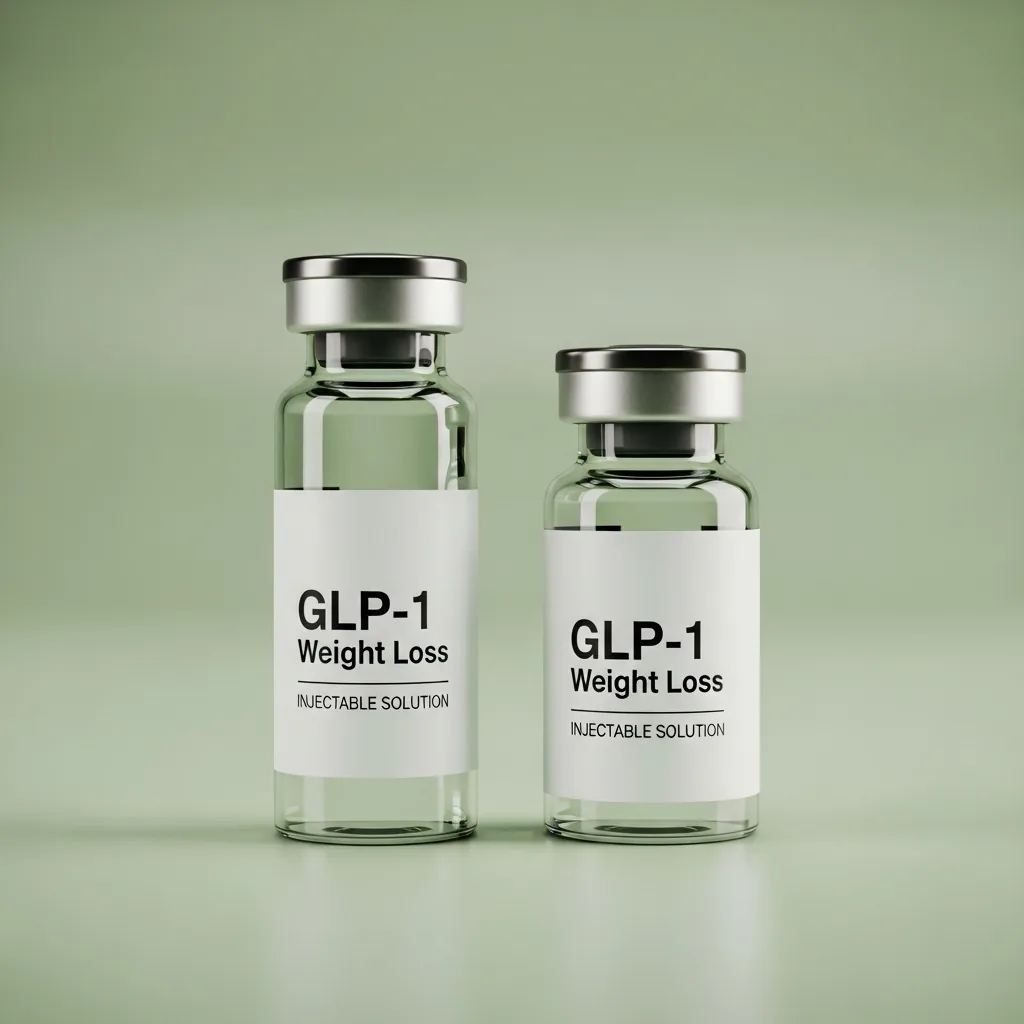
For the first time, modern medicine has introduced a class of medications that is fundamentally changing the conversation. GLP-1 receptor agonists — medications like semaglutide and tirzepatide — work by targeting the biological pathways that control appetite, blood sugar, and metabolic function.
The Breakthrough
The First Time in Years You'll Think Clearly About Food
Patients on GLP-1 therapy often describe it as "the first time in years I can think clearly about food" — without constantly battling hunger, cravings, and the relentless food noise that never stopped.
GLP-1 receptor agonists work by targeting the biological pathways that govern appetite, blood sugar, and metabolic function. They reduce "food noise," help regulate insulin, and allow patients to make sustainable lifestyle changes that dieting alone could never achieve.
This is not about vanity. This is about reducing your risk of diabetes, heart disease, cancer, and shortened life expectancy. This is about quality of life.
Making Care Accessible
Treatment Shouldn't Bea Luxury.
At South Florida Trim Clinic, we believe access to gold-standard telehealth care should not depend on your zip code or income. You believed what you were told for years. Now it's time to take your health back.
For about $5 per day — roughly the cost of a cup of coffee — many patients are finally taking control of their metabolic health. No in-person visits. No waiting rooms. No judgment.
"You believed what you were told.
Now it's time to take your health back."
— South Florida Trim Clinic
South Florida Trim Clinic
Your Future Self Will Thank You.
You believed what you were told. Now medicine has caught up — and the tool exists. The only question is whether you're ready.
South Florida Trim Clinic
This Is Not About Vanity.This Is About Your Life.
Studies continue to show that excess weight is strongly associated with increased risks of Type 2 diabetes, heart disease, stroke, fatty liver disease, certain cancers, and shortened life expectancy. The tool now exists. You deserve access to it.
Medical References & Sources
- 1. Centers for Disease Control and Prevention. Adult Obesity Facts. CDC.gov, 2023.
- 2. Centers for Disease Control and Prevention. Behavioral Risk Factor Surveillance System (BRFSS). State obesity data, 2023.
- 3. National Cancer Institute. Obesity and Cancer. cancer.gov, 2022.
- 4. Zheng Y, Ley SH, Hu FB. Global aetiology and epidemiology of type 2 diabetes mellitus and its complications. Nature Reviews Endocrinology, 2018; 14(2):88–98.
- 5. Young T, et al. Epidemiology of obstructive sleep apnea. American Journal of Respiratory and Critical Care Medicine, 2002; 165(9):1217–1239.
- 6. Messier SP, et al. Exercise and dietary weight loss in overweight and obese older adults with knee osteoarthritis. Arthritis & Rheumatism, 2004; 50(5):1501–1510.
- 7. Younossi ZM, et al. Global epidemiology of nonalcoholic fatty liver disease. Hepatology, 2016; 64(1):73–84.
- 8. American Medical Association. AMA Adopts New Policies — Obesity as a Disease. AMA Press Release, 2013.
- 9. Wilding JPH, et al. Once-Weekly Semaglutide in Adults with Overweight or Obesity (STEP 1). NEJM, 2021; 384:989–1002.
Medical Disclaimer: This page is for educational purposes only and does not constitute medical advice. GLP-1 medications are prescribed by licensed providers based on individual health evaluations. Results vary. Medical eligibility required. Not every patient qualifies for treatment.